How a 2.1 Channel Speaker Supplier Delivers Balanced Sound for Modern Users
Why the 2.1 Channel Format Still Dominates Modern Audio
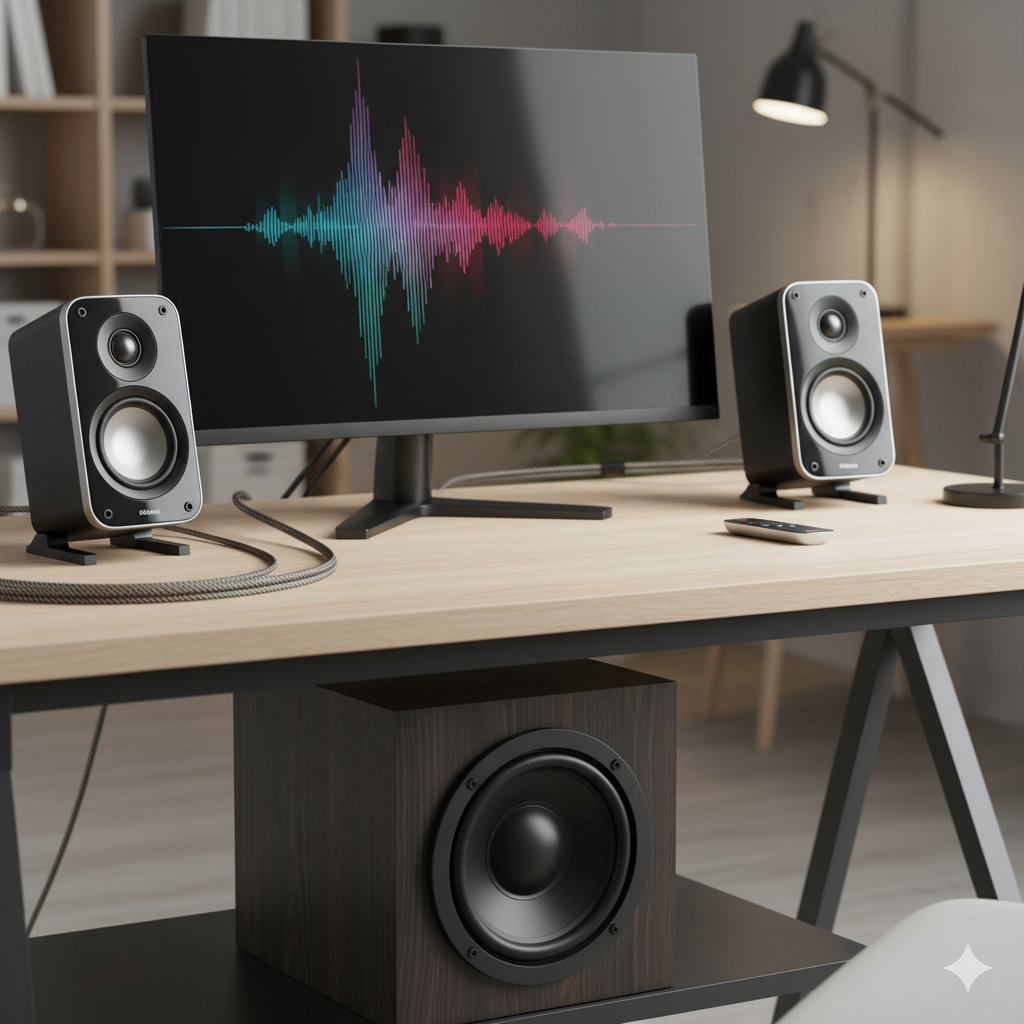
In today’s connected lifestyle, people expect cinematic sound without complex installations. The 2.1 channel format—two satellite speakers and a dedicated subwoofer—has remained the most efficient way to achieve stereo clarity with deep bass in limited space.
However, not all systems are equal. Many entry-level designs suffer from unstable frequency distribution or weak crossover calibration, causing distortion at higher volumes. Professional 2.1 channel speaker suppliers have therefore re-engineered how subwoofer enclosures, amplifier circuits, and DSP algorithms interact, creating balanced acoustic ecosystems suitable for both personal and professional use.
The Acoustic Science Behind 2.1 Channel System Engineering
Traditional 2.1 systems were built around analog amplifiers and fixed passive crossovers, relying heavily on enclosure size to generate bass energy. This often led to inconsistent low-frequency response and reduced power efficiency.
Modern designs integrate Class-D amplifier modules, active DSP crossovers, and precision-tuned bass ports. The key innovation lies in frequency division control: while the subwoofer manages the 20–150 Hz range, satellite drivers focus on mids and highs, ensuring each driver performs within its optimal range.
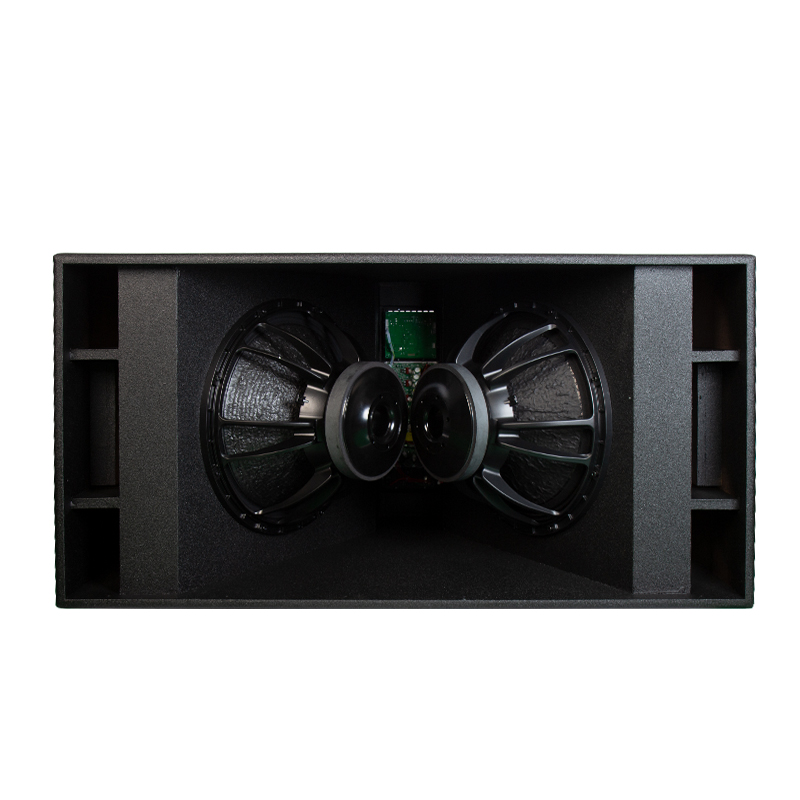
Suppliers like Audfine simulate air pressure flow and cabinet resonance through acoustic modeling tools, fine-tuning port geometry and enclosure stiffness to deliver stable bass without unwanted vibration.
From Analog Simplicity to Digital Precision
| Aspect | Traditional 2.1 Systems | Modern 2.1 Channel Speaker Supplier Approach |
|---|---|---|
| Amplification | Analog AB circuits | Class-D, low heat, high efficiency |
| Bass Tuning | Fixed crossover network | DSP-controlled subwoofer curve |
| Cabinet Design | Basic wooden box | MDF + internal bracing for resonance control |
| Connectivity | AUX only | Bluetooth, USB, Optical, and RCA inputs |
| Testing | Manual audio check | Automated frequency sweep calibration |
Unlike conventional consumer-grade setups, today’s suppliers integrate digital control into every production stage. Automated sweeps ensure left-right satellite consistency, while real-time DSP adjustment keeps output linear across changing volume levels.
How Design Precision Becomes Measurable Value
-
Efficient Amplifier Control
Class-D amplification provides up to 90% energy efficiency, reducing heat and extending lifespan. -
Tonal Accuracy Through DSP
Digital tuning adjusts crossover slopes and equalization curves, maintaining clarity at all playback volumes. -
Balanced Power Distribution
Satellite and subwoofer synchronization ensures consistent phase alignment for a unified sound field. -
Cabinet Durability and Aesthetic Integration
MDF and composite materials provide rigid housing with acoustic damping, suitable for both desktops and living rooms. -
Certified Global Compliance
Every production batch follows CE, FCC, and RoHS standards, supporting safe international deployment for OEM clients.
These performance mechanisms turn a compact 2.1 setup into a professional-grade sound platform, balancing engineering accuracy with consumer usability.
Where 2.1 Channel Systems Excel in Real-World Applications
The 2.1 configuration has evolved into a core component across multiple industries:
-
Home entertainment – providing immersive surround-like sound for streaming and gaming setups.
-
Corporate environments – ensuring clear speech and multimedia playback in meeting rooms.
-
Professional studios – functioning as secondary reference monitors for mix validation.
-
Hospitality and retail – delivering ambient audio coverage with minimal hardware footprint.
In a recent OEM collaboration, Audfine developed a compact 2.1 Bluetooth system for a global electronics retailer. By replacing traditional crossovers with DSP tuning and reengineering the subwoofer enclosure, the system achieved a 30% improvement in low-end accuracy and 25% reduction in electrical noise, while maintaining cost efficiency.
Guidance for System Integrators and Buyers
-
Power Matching: Select amplifier wattage that complements room size—40–60 W RMS for desktops, 100 W+ for small lounges.
-
Crossover Frequency: Target 100–150 Hz for balanced handoff between satellites and subwoofer.
-
Material Selection: MDF or composite fiber for acoustic stability; ABS plastic for lightweight mobility.
-
Input Diversity: Opt for models offering multiple interfaces for flexible multimedia compatibility.
-
Testing Protocol: Always run frequency sweeps and distortion analysis post-installation to confirm phase coherence.
Common Technical Questions
How does a 2.1 system differ from 5.1 or 7.1 setups?
2.1 systems prioritize simplicity and space-efficiency while retaining stereo imaging and deep bass; multi-channel formats require complex decoding and larger rooms.
Can DSP tuning adapt automatically to room conditions?
Yes. Advanced modules measure output feedback and adjust gain and EQ to minimize room reflections and standing waves.
Is OEM customization possible for amplifier modules and enclosures?
Audfine provides modular amplifier and enclosure customization for brand differentiation and regional acoustic targets.
What is the minimum order quantity for OEM projects?
The standard MOQ begins at 1000 units, balancing cost and production flexibility.
Partnering for Consistency, Efficiency, and Acoustic Balance
The success of a 2.1 system lies in its balance—between frequency distribution, amplifier efficiency, and user convenience. Modern suppliers achieve this balance through engineering precision, automated testing, and digital control.
For brands and distributors aiming to deliver high-performance yet accessible sound systems, Audfine provides end-to-end 2.1 channel development—from design simulation to production and global compliance testing.
Learn more about our sound solutions on Audfine’s homepage or contact our engineering specialists through the contact page for OEM collaboration and consultation