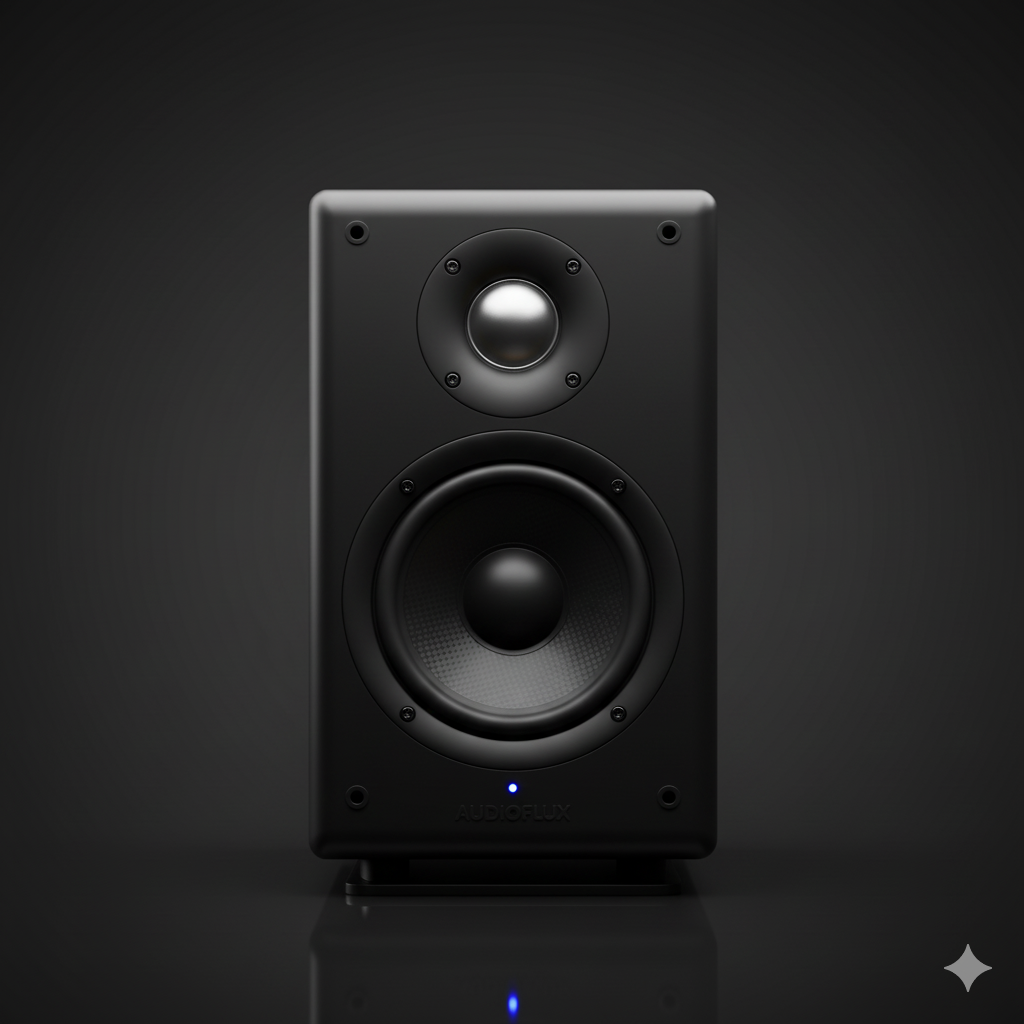
The Rise of Active Speaker Manufacturers in Modern Audio
The evolution from analog audio systems to digital signal processing (DSP) has redefined how sound is produced and perceived. Traditional passive systems—requiring external amplifiers, crossovers, and long cable runs—often suffered from signal degradation and inconsistent tonal balance.
As the demand for clarity, portability, and setup efficiency increased, audio engineers sought integrated solutions. Modern active speaker manufacturers are no longer simply building loudspeakers—they are designing intelligent, self-contained sound systems capable of delivering precise frequency response and stability under any conditions.
Principle and Background: The Logic Behind Active Speaker Design
In conventional passive systems, the amplifier is separate from the speaker enclosure. The amplified signal travels through long cables, encountering potential resistance, loss, and interference. Furthermore, each driver in the cabinet shares a single amplifier channel, making fine control over frequencies and phase alignment difficult.
Active speakers, by contrast, incorporate amplifiers and crossovers directly into the cabinet. Each driver—woofer, midrange, or tweeter—receives its dedicated amplifier channel, ensuring clean power distribution and superior dynamic control.
At the heart of modern active systems lies Class D amplification: compact, energy-efficient, and capable of exceeding 90% conversion efficiency. Coupled with DSP processors, Class D amplifiers allow precise tuning of frequency response, delay, and protection circuits. According to studies by the Audio Engineering Society (AES), DSP-managed systems maintain 20% higher linearity compared to analog setups under identical load conditions.
Active vs. Passive Systems in Real Performance
| Feature | Traditional Passive Speaker | Active Speaker System |
|---|---|---|
| Amplification | External amp rack required | Integrated Class D amplifier |
| Signal Control | Analog crossover | DSP digital crossover |
| Setup Complexity | Requires multiple cables and tuning | Plug-and-play simplicity |
| Sound Consistency | Variable across setups | Factory-calibrated accuracy |
| Portability | Heavy due to amp racks | Lightweight and compact |
| Maintenance | Separate components prone to wear | Integrated protection and monitoring |
By integrating amplification and DSP into a unified structure, active designs minimize distortion and time alignment errors. The result is reliable, repeatable performance for touring events, studios, and permanent installations alike.
Core Advantages and Engineering Value
1. Precision and Control
Built-in DSP modules enable real-time optimization of crossover frequencies, equalization, and limiter thresholds. Every note, from low bass to high treble, maintains consistency across venues.
2. Efficiency and Portability
With Class D amplifiers, active speakers offer high output in lightweight enclosures. Reduced heat and compact power modules make them ideal for mobile sound applications.
3. System Reliability
Active protection circuits prevent thermal overload and driver failure. Integrated limiters ensure longevity without sacrificing SPL performance.
4. Streamlined Deployment
Fewer external components mean faster installation and reduced logistic costs. Event crews can deploy complete PA systems in half the time compared to passive setups.
5. Long-Term Cost Effectiveness
While initial costs may seem higher, reduced cabling, amplifier maintenance, and downtime make active systems more economical in the long run.Applications and Case Study: From Stage to Studio
Live Events and Touring
Active speakers simplify sound setup for live performances and mobile productions. With built-in DSP presets and balanced inputs, they maintain consistent tonal character across different stages.
Houses of Worship and Auditoriums
These environments benefit from the uniform sound coverage and preset room correction of active systems, ensuring clarity for speech and music alike.
Recording Studios
In studio monitoring, active speakers offer precise transient response and flat frequency curves critical for mixing and mastering accuracy.
Case Example:
A regional event company replaced its old rack-based amplifiers with an active line array system. Setup time dropped by 40%, cable requirements by 35%, and failure incidents decreased to zero across 20 consecutive events. Sound uniformity across a 30-meter audience area improved by 22%.
Product Recommendation: Choosing the Right Active Speaker for Your Environment
Selecting the right active speaker depends on venue size, acoustic conditions, and operational needs. Below are tailored recommendations to help integrators and end users identify the best fit:
For Large Events & Outdoor Performances
-
Recommended Type: Active Line Array Systems
-
Key Features: Long-throw projection, modular scalability, consistent SPL distribution
-
Use Case: Stadiums, music festivals, touring shows
For Medium Venues & Indoor Stages
-
Recommended Type: Powered PA Speakers or Active Stage Monitors
-
Key Features: Portable, easy setup, integrated limiter protection
-
Use Case: Auditoriums, conference halls, performing arts centers
For Studios & Control Rooms
-
Recommended Type: Active Studio Monitors
-
Key Features: Flat frequency response, DSP calibration, near-field accuracy
-
Use Case: Music production, mixing, broadcast editing
For Retail & Commercial Installations
-
Recommended Type: Column Active Speakers
-
Key Features: Slim profile, wide horizontal coverage, aesthetic integration
-
Use Case: Restaurants, churches, exhibition spaces
For Low-Frequency Enhancement
-
Recommended Type: Active Subwoofers
-
Key Features: Deep bass extension, thermal protection, balanced power output
-
Use Case: Concert venues, clubs, cinema rooms
Common Questions About Active Speaker Systems
Q1: What makes an active speaker manufacturer different from a passive one?
An active manufacturer integrates amplification and DSP into the design phase, ensuring seamless acoustic and electrical alignment.
Q2: Are active speakers suitable for long-term use in professional touring?
Yes. Their compact form and thermal protection make them ideal for continuous deployment under demanding conditions.
Q3: Can active speakers be used with analog mixers?
Absolutely. Most active systems accept both balanced XLR and TRS inputs, supporting analog and digital workflows.
Q4: How do I maintain an active speaker system?
Regular dust removal and adequate ventilation are sufficient. Internal protection circuits manage temperature and voltage fluctuations.
Q5: Do active speakers require calibration?
High-end models come pre-calibrated but also allow manual tuning via DSP software for room-specific optimization.
Driving Acoustic Innovation: How Active Systems Define the Next Era
The transition from analog complexity to intelligent, digitally optimized systems marks a new era in professional audio. Active speaker technologies bring engineers closer to acoustic precision—uniting power efficiency, DSP control, and enclosure design into one coherent ecosystem. This integration allows sound professionals to achieve unmatched consistency across stages, studios, and commercial venues.
Audfine, as an experienced active speaker manufacturer, continues to advance this evolution with engineering-driven innovation and a commitment to system reliability. From compact powered monitors to full-scale active line array solutions, every product reflects years of research and acoustic refinement.
To learn more about Audfine’s professional sound systems, visit our official homepage for complete product information, or contact our technical team to receive personalized configuration advice and engineering support tailored to your project.