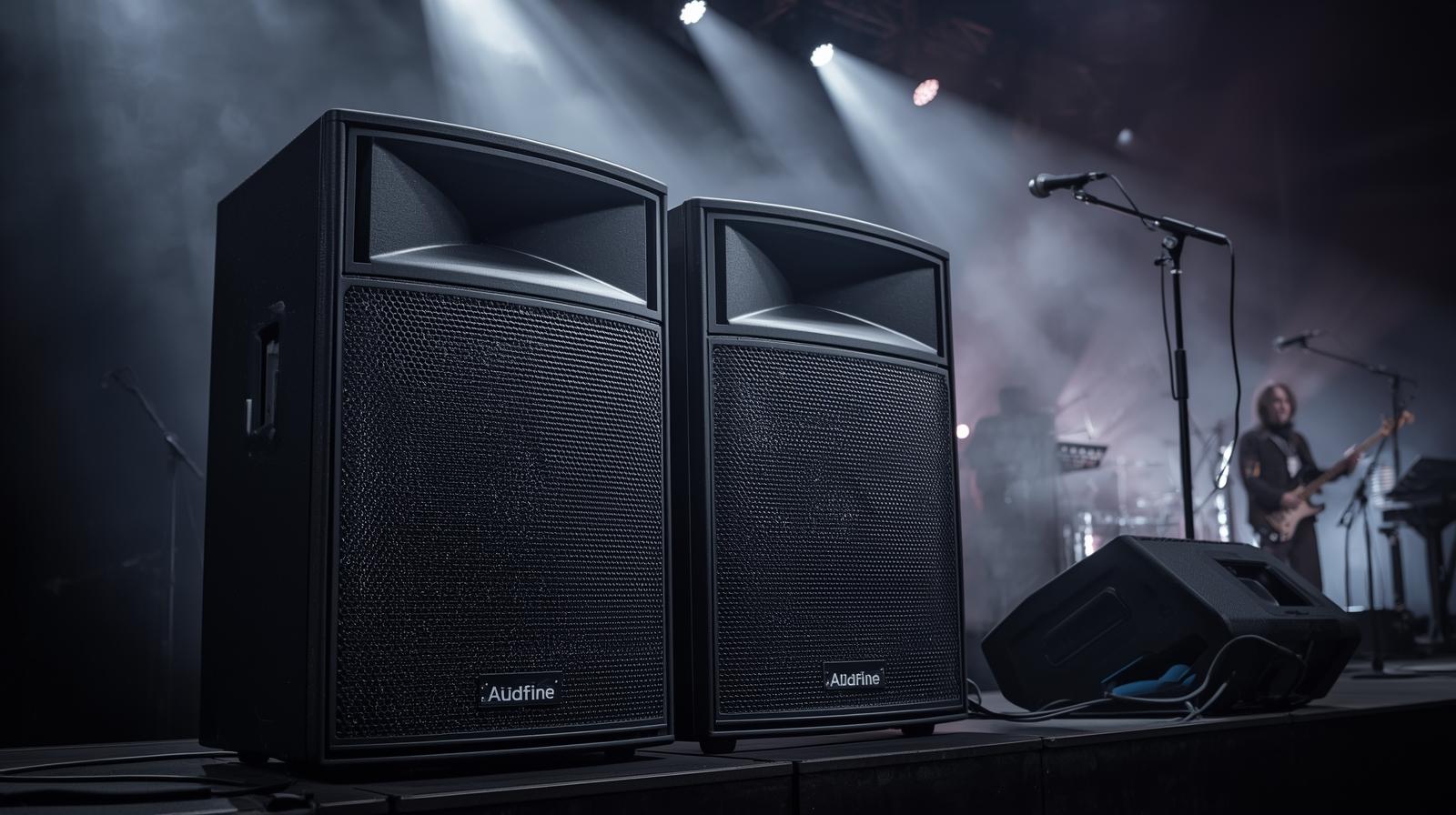
Power Meets Portability: How Powered PA Speakers Redefine Live Sound Performance
The Real-World Challenge Behind Portable Power
Whether it’s a live concert, a public event, or a small outdoor gathering, people expect professional sound that fills the space clearly and consistently. Yet traditional passive sound systems often require external amplifiers, complex cabling, and lengthy setup time—challenges that can drain both energy and budgets.
This is why modern powered PA speakers have become the go-to solution. By combining built-in amplification with smart DSP control, they simplify setup, reduce transport weight, and maintain high acoustic output without compromise. Manufacturers like Audfine have taken this evolution further—designing systems that balance efficiency, clarity, and durability for touring artists and commercial venues alike.
How Active Design Transformed the Traditional PA System
Conventional PA systems separate the amplifier from the speaker cabinet. The drawback is obvious—signal loss over long cables, mismatched power ratings, and increased risk of distortion under load.
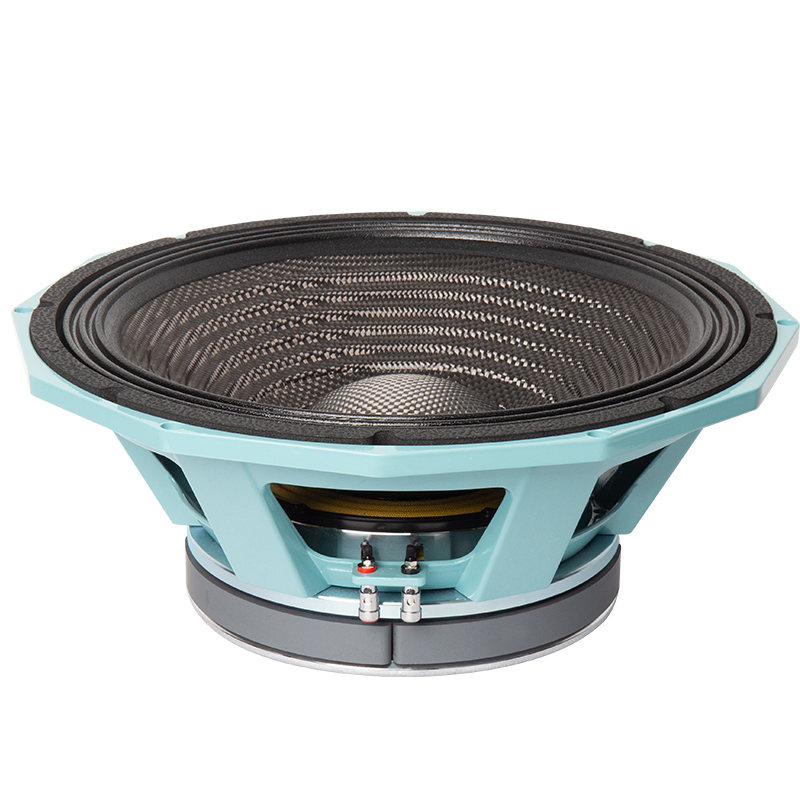
Powered PA systems eliminate these weak points. Their amplifier module is built directly into the speaker, ensuring every driver receives the exact power it needs. Most use Class-D amplifier technology, chosen for its light weight, energy efficiency, and low heat output.
Meanwhile, integrated Digital Signal Processing (DSP) manages equalization, crossover, and limiter functions in real time. This ensures the system delivers consistent tonal balance and protects components from overload—even under demanding outdoor conditions.
Comparing Old and New: A Shift Toward Smarter Sound
| Feature | Passive PA System | Powered PA Speakers |
|---|---|---|
| Amplification | External amp required | Built-in Class-D amplifier |
| Setup Time | Complex cabling and matching | Plug-and-play simplicity |
| Power Efficiency | 50–60% | 85–90% |
| Portability | Heavy multi-unit setup | Compact, integrated cabinet |
| Sound Control | Manual EQ adjustment | DSP-controlled frequency tuning |
The difference is clear: powered systems deliver not just loudness but intelligent adaptability. Users can fine-tune sound profiles instantly—switching between live vocals, background music, or DJ playback with preset EQ curves.
What Makes Modern Powered PA Systems Stand Out
1. Efficiency Without Compromise
Class-D amplification provides clean headroom while cutting weight by nearly 40% compared to traditional iron-core designs.
2. DSP Precision in Every Note
Built-in processors adjust EQ, crossover, and phase alignment automatically, ensuring every frequency range works in harmony.
3. Durable Acoustic Architecture
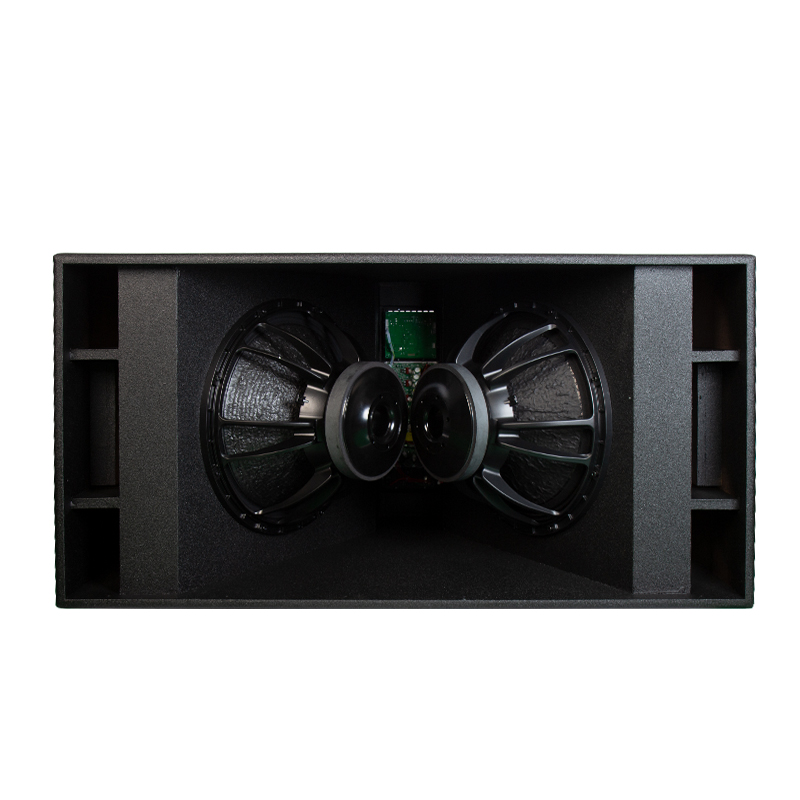
High-density polypropylene or MDF enclosures absorb vibration and resist environmental stress, extending lifespan for touring applications.
4. True Plug-and-Play Mobility
With amplifier, DSP, and protection circuitry integrated, users simply connect a mixer or microphone—no racks, no external amps, no technical setup required.
5. Scalable OEM Flexibility
Manufacturers like Audfine offer modular components—drivers, amp modules, and cabinet designs—allowing brands to customize their models while maintaining production consistency.
Where Powered PA Speakers Excel in Everyday Use
Powered PA speakers now serve far more than concert halls. Their versatility suits almost any sound environment:
-
Live events and concerts – Reliable output and easy setup for bands and DJs on the move.
-
Corporate venues – Clear, distortion-free speech reinforcement for conferences or presentations.
-
Outdoor gatherings – Weather-resistant cabinets and efficient cooling ensure stable performance under heat or humidity.
-
Retail and hospitality spaces – Clean background sound with controllable volume zones.
In a recent deployment, Audfine partnered with an events equipment supplier in Europe to replace passive systems with powered PA units. The result: setup time reduced by 60%, while users reported a 25% improvement in clarity and output balance across outdoor venues.
Practical Tips for Selecting the Right Powered PA System
-
Assess venue size and coverage needs. Smaller halls benefit from 8–10" woofers, while open-air shows require 12–15" drivers.
-
Check output wattage and SPL. For professional use, aim for 300–500 W RMS per cabinet to maintain clear headroom.
-
Prioritize DSP features. Models with built-in limiters and EQ presets simplify setup and protect drivers from clipping.
-
Evaluate connectivity. Look for combo XLR/TRS inputs and Bluetooth or RCA options for flexible use.
-
Don’t overlook portability. Choose models with ergonomic handles and lightweight enclosures for frequent transport.
Common Questions from Performers and Integrators
Do powered PA speakers need a separate amplifier?
No. Each speaker includes its own amplifier module, designed and matched to its internal drivers.
Can powered PA speakers handle outdoor use?
Yes. Most models use weather-resistant components and thermal protection to prevent overheating during outdoor operation.
Are they suitable for permanent installations?
Absolutely. With XLR link outputs and stable power circuits, they can be daisy-chained or mounted in fixed venues.
Can OEM versions be customized for branding or specs?
Audfine supports full OEM customization—from cabinet design to amplifier tuning and logo placement—tailored for different markets.
Power, Precision, and Simplicity in One System
The evolution of powered PA speakers reflects a simple truth: professional audio doesn’t have to be complicated. By merging amplifier intelligence, acoustic control, and portability, modern systems achieve consistent performance in every environment—from touring stages to business events.
For audio brands, event companies, and distributors seeking to design or source high-performance portable systems, Audfine provides full OEM and engineering support—from acoustic modeling to production and certification.
Explore our complete product ecosystem at Audfine’s homepage or reach our technical specialists directly via the contact page for collaboration details.