Revolutionizing Sound: Inside the Modern Active Speaker Factory
Rethinking Performance Consistency in Modern Audio Systems
In professional and commercial sound environments, achieving consistent acoustic results is one of the most persistent challenges. Traditional passive speaker systems rely on external amplifiers, analog crossovers, and user calibration—all potential sources of error. Over time, these variables create tonal inconsistencies between setups, especially when transported or used across different venues.
The question driving today’s audio manufacturing is no longer how to make speakers louder, but how to make them consistently accurate and adaptive to any environment—a challenge that reshaped the modern active speaker factory.
Integration as a Principle: Engineering Sound at the Source
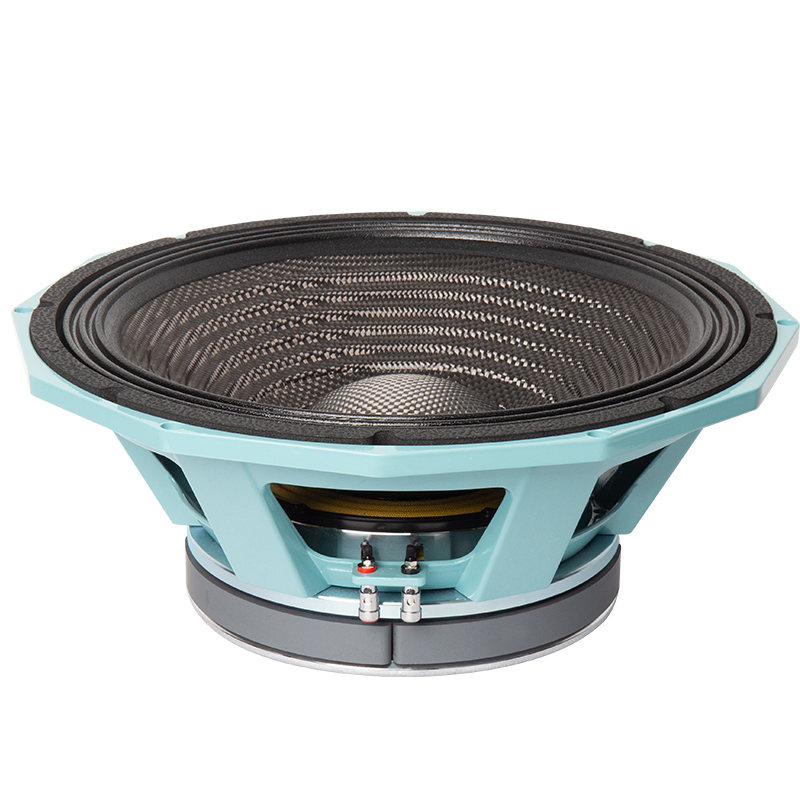
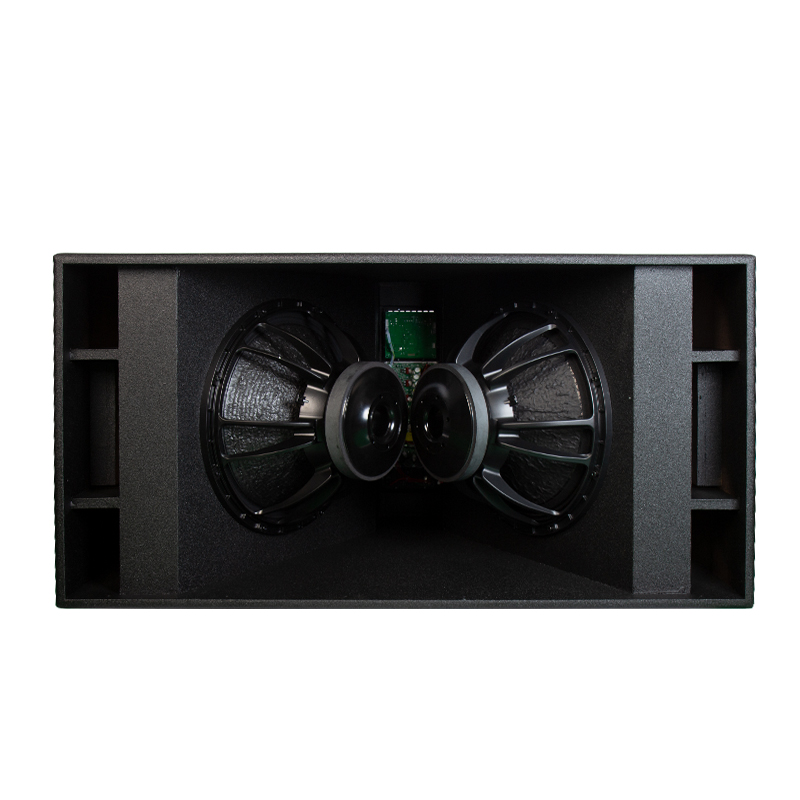
Active speakers integrate amplification, DSP (Digital Signal Processing), and crossover control directly inside the enclosure. Instead of relying on external signal chains, engineers calibrate each driver and amplifier as a unified system.
This integration achieves:
-
Direct signal integrity – No loss between amplifier and driver, ensuring high dynamic precision.
-
DSP-defined crossovers – Frequencies divided and aligned digitally for linear response.
-
Thermal and limiter control – Built-in protection for sustained high-volume operation.
The result is a sound system where tonal balance, phase coherence, and headroom are not left to chance—but defined at the factory level.
Active vs. Passive Systems: A Shift in Engineering Philosophy
The distinction between passive and active speakers goes beyond wiring—it represents two different design philosophies.
| Engineering Focus | Active Speaker Factory | Passive Speaker System |
|---|---|---|
| Amplification | Integrated per driver, digitally controlled | External amplifier, analog control |
| Crossover Tuning | DSP precision alignment | Fixed analog network |
| Setup Time | Factory-calibrated, plug-and-play | Manual configuration required |
| Signal Efficiency | Direct and lossless | Loss over cabling and impedance |
| System Scalability | Easy modular linking | Complex amplifier matching |
This shift empowers engineers and users alike: active systems deliver predictable results without additional setup, allowing sound designers to focus on creative and acoustic goals rather than constant recalibration.
Field Applications: Consistency Across Real-World Environments
The engineering behind active speakers proves its worth only when translated into real-world reliability.
-
Recording Studios – Flat response and controlled dynamics support precise monitoring and mastering.
-
Concert and Touring – Modular line arrays reduce cabling complexity, ensuring consistent output between venues.
-
Corporate and Educational Venues – Integrated amplifiers simplify installation, reducing maintenance cycles.
-
Retail and Public Spaces – DSP calibration adapts automatically to reflections and noise environments.
Each setting benefits from the predictability and repeatability that modern factory calibration provides—an essential trait for scalable sound deployment.
Professional Guidance: How to Evaluate a Reliable Active Speaker Factory
Choosing a manufacturing partner is an engineering decision, not a marketing one.
Key evaluation metrics include:
-
DSP and Acoustic Calibration Facilities – Availability of anechoic testing and digital tuning labs.
-
Amplifier-Driver Integration Process – Matching power modules to specific impedance curves.
-
Reliability Testing – Long-duration heat and frequency endurance under variable loads.
-
Design Flexibility – Modular amplifier boards and firmware updates for OEM adaptation.
-
Data Documentation – Provision of SPL graphs, distortion curves, and impedance measurements for engineering validation.
A factory that treats every speaker as a calibrated system rather than a collection of components is the one capable of long-term, scalable production excellence.
Our Engineering Advantage: Precision at Every Stage of Production
At Audfine, every active speaker is treated as a full acoustic instrument—tested, tuned, and verified across frequency, distortion, and thermal performance parameters.
-
Integrated R&D and Assembly: Our acoustic engineers and electronic designers work within the same workflow, reducing tuning mismatches.
-
DSP-Controlled Consistency: Each system undergoes digital calibration for linear frequency and time alignment before packaging.
-
Component Traceability: Every amplifier and driver pair is serialized for maintenance traceability and performance data retention.
-
OEM/ODM Adaptability: We provide reprogrammable DSP profiles and modular board configurations to fit diverse design targets.
This full-cycle precision—from design simulation to final acoustic verification—defines Audfine’s position as a new-generation active speaker manufacturer, where accuracy, efficiency, and scalability converge.
Final Insight
The modern active speaker factory represents a paradigm shift: sound no longer depends on user calibration but on factory-engineered precision. Through integration, DSP management, and controlled testing, manufacturers now deliver systems that remain consistent across environments and lifespans.
For professionals and organizations seeking proven performance in powered audio solutions, explore our latest systems at Audfine Homepage or connect directly via Contact Us.