You know what I keep hearing from people who run sound for weddings or small festivals?
“Why do line arrays cost so much when the parts look simple?”
Or this one: “Can I just use two big speakers on sticks?”
Yeah, you could. But then half your audience gets muddy vocals and the other half gets ear pain.
I’m Dave from Audfine. We’re a line array speaker factory in Guangzhou. Not a trading company. Not a drop-shipper. We weld grilles, wind voice coils, and burn-in amps ourselves.
Today I want to talk about our S18L424B – a powered dual-4″ line array system. But more importantly, I want to answer the questions you’re actually typing into Google at 11pm before an event.
First, why does anyone need a dual 4″ line array anyway?
Here’s the short version: regular PA speakers spray sound in a big circle. Outdoors, that circle gets eaten by wind and open air. A line array shapes the sound into a flat, wide ribbon – like a flashlight beam vs a bare bulb.
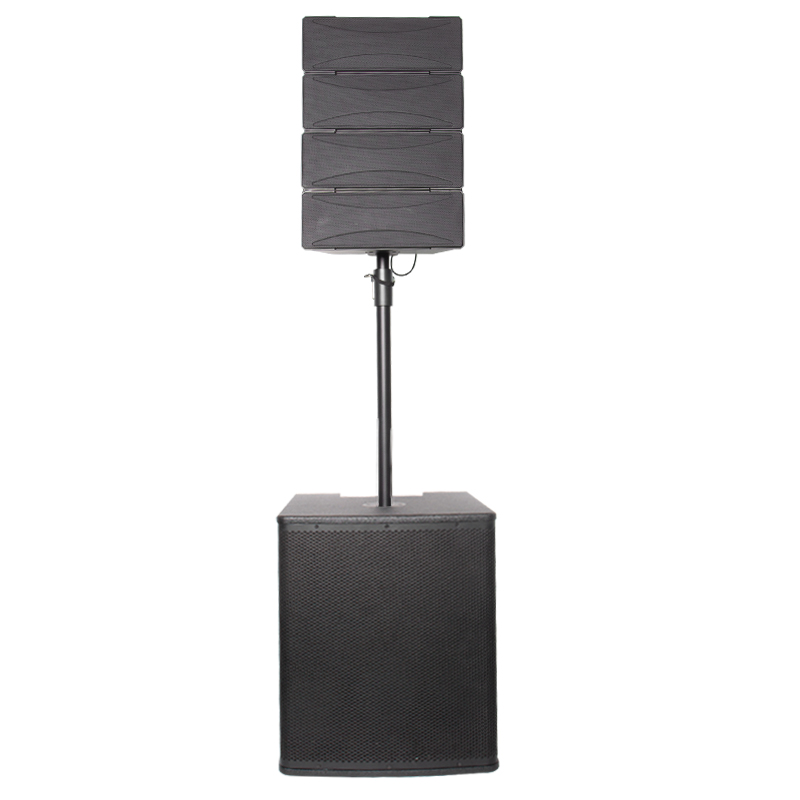
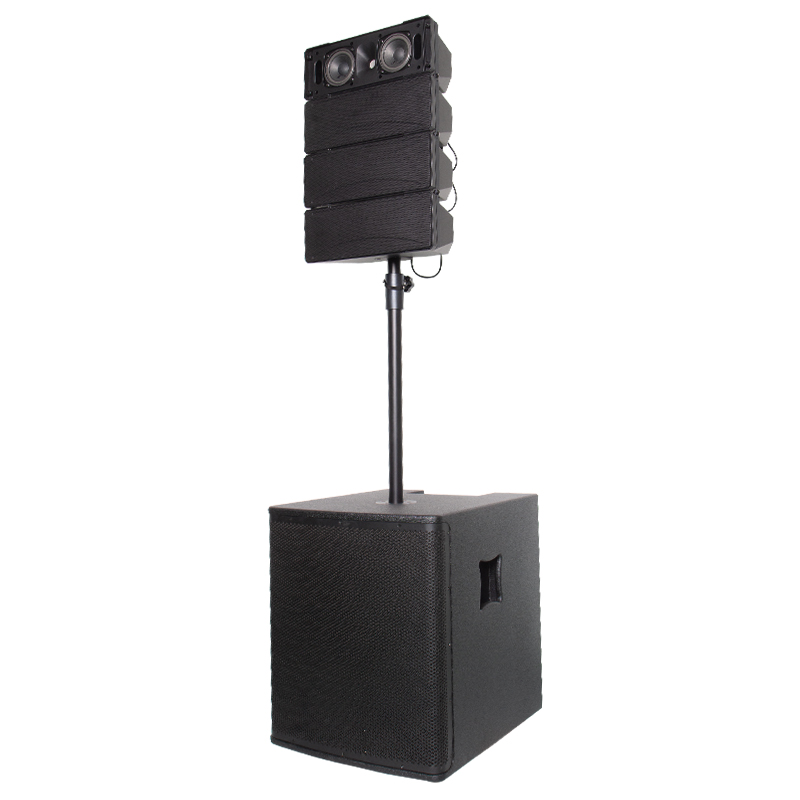
The S18L424B uses four small cabinets, each with two 4″ full-range drivers and a 1″ tweeter. That’s a 3-way line array factory design – lows from the sub, mids from the 4″ cones, highs from the tweeter. You get clarity across 200 people without blasting the front row.
A customer last month asked me: “Will four little 4″ speakers really cover a beach wedding?”
We set one up on a beach near Shenzhen. 150 guests. No side fills. The couple’s first dance – vocals were clear, bass was punchy. The groom emailed me: “I didn’t believe it until I heard it.” That’s the 121dB max SPL doing its job.
 |
 |
 |
What’s actually in the box? (Real talk)
When you buy from a China PA speaker OEM like us, you get more than a product. You get options. But let me list the standard stuff without sounding like a spec sheet:
-
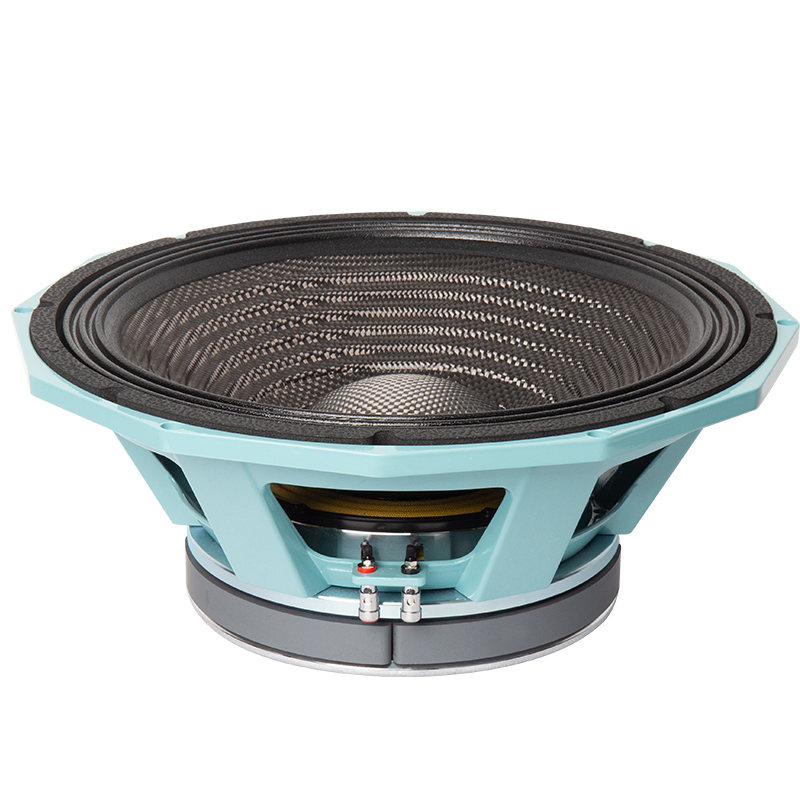
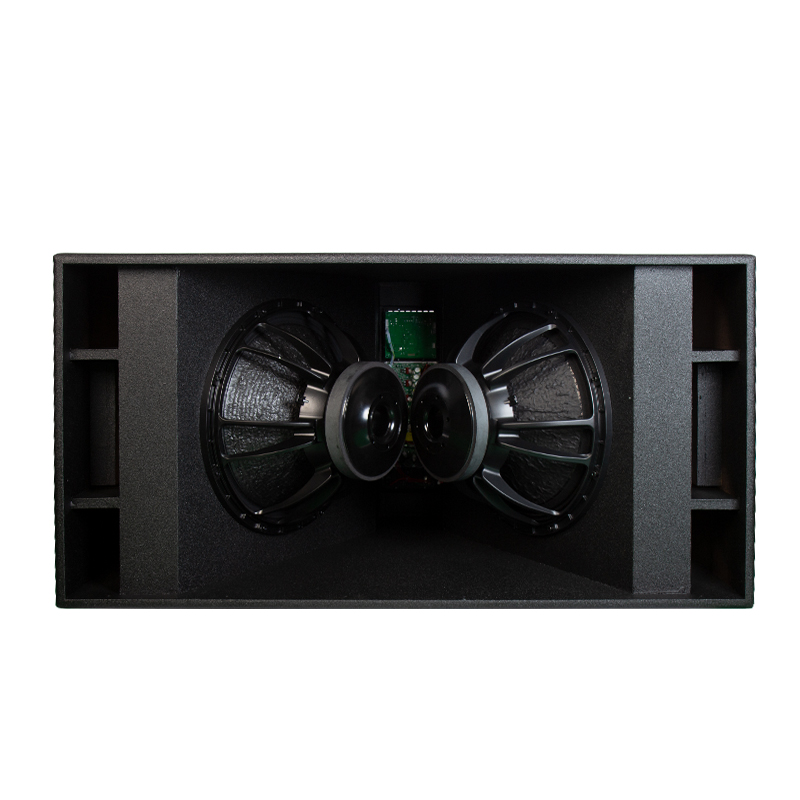
One 18″ subwoofer – MDF box, metal grille, 3″ voice coil, heavy ferrite magnet.
-
Four 4″ line array tops – plastic (PP) cabinets, each with two 4″ drivers + a 1″ tweeter.
-
A steel pole, a line array bracket, and a speaker cable (12-gauge, Speakon ends – not the thin junk).
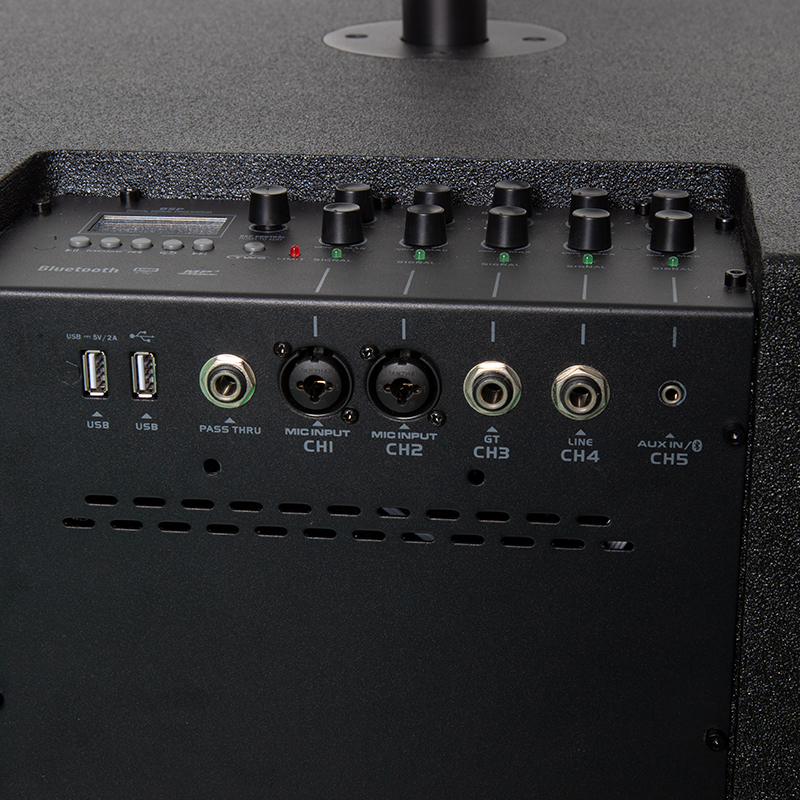
The sub has a built-in 1400W Class-D amp and a 5-channel mixer. So you don’t need a separate mixer for a small gig. Plug in two mics, a guitar, a phone via Bluetooth, even a laptop via USB.
One thing people always ask: “Can I use this with a record player?”
Yes. We’ve done speaker for record player OEM for a retro bar chain. They wanted a vintage look but line array performance. We added RCA inputs with a phono preamp option. On the standard S18L424B, you can use a 3.5mm to RCA cable from a turntable with a built-in preamp. If you need a dedicated phono stage, just tell us – we’re a sound system ODM supplier, so we modify hardware for you.
The DSP – not just for nerds
Some factory reps will tell you “our DSP is great” and leave it there. Let me be specific.
The S18L424B has a built-in processor that lets you adjust ±6dB EQ, echo, reverb, and guitar effects. There’s a knob for subwoofer level separate from the tops.
A church sound guy asked me last week: “Can I save indoor and outdoor presets?”
Yes. The DSP stores your settings. And because we’re a dual 4 line array supplier that builds the electronics in-house, we can pre-load your presets at the factory for your OEM order. You want the “Pastor voice” EQ? Done. “DJ mode” with extra bass? Easy.
Bluetooth TWS – but here’s the catch
The system has Bluetooth 5.0 with TWS (true wireless stereo). That means you can link two S18L424B systems as left and right without a cable between them.
But a DJ once called me out: “Isn’t Bluetooth too slow for live sound?”
He was right – for vocals, you want a wired mic. For background music between sets, Bluetooth is fine. The S18L424B lets you use both. The mixer has combo XLR/TRS inputs, 6.35mm jacks, 3.5mm aux, and USB-A ports. You can have a wired mic on channel 1 and a phone playing backing tracks via Bluetooth at the same time. No fighting.
We also offer Bluetooth speaker ODM China upgrades – want Bluetooth 5.2 with lower latency? We can do that for your brand.
The parts that break on cheap systems (and how we fix them)
I’ve torn apart line arrays from other factories. Here’s what fails:
Speaker cables – They give you 24-gauge wire that heats up and melts. We include a proper 12-gauge speaker cable China manufacturer – our own. If you want bulk rolls with your logo, we print on the jacket.
Speaker stands – The included pole is fine for flat ground. But for uneven stages? You need crank-up stands. We’re a speaker stands OEM supplier – we can source or manufacture heavy-duty tripods with your brand.
Speaker grilles – Cheap ones use thin mesh that dents if you look at it wrong. Our speaker grill custom OEM uses 1.2mm steel, powder-coated. We can punch your logo into the grille – no sticker that peels off.
A rental company owner told me: “I’m tired of replacing grilles every season.” We sent him samples with double-thick mesh. He ordered 200 units.
Why buy direct from Audfine? (Not a trick question)
You can buy from a big retail brand and pay three times the price. Or you can buy from a trading company that doesn’t know a capacitor from a resistor.
Or you can come to us – a 3-way line array factory that builds everything under one roof.
-
OEM customization: Your logo on the cabinet, your color, your grille pattern, your packaging. We even do custom DSP presets.
-
Low MOQ: 50 units for basic branding. 100 for custom colors. Talk to us about smaller runs for samples.
-
Quality control: Every system runs for 48 hours before packing. We test thermal limits, RMS power, and Bluetooth pairing.
I had a customer from Texas who wanted a line array that could run on battery power for street performances. We designed a custom version with internal lithium batteries and a solar charging option. That’s the benefit of working with a factory – we don’t say “no”, we say “how many?”
The one spec sheet doesn’t tell you
Look at any line array spec sheet. You’ll see frequency response, SPL, power.
But what about real-world use?
The S18L424B’s frequency response is 50Hz-20kHz. That 50Hz is important – that’s kick drum and bass guitar territory. Many small line arrays roll off at 80Hz or 100Hz. Then your bass sounds like a wet cardboard box.
The crossover points are 150Hz and 2.5kHz. That means the sub handles everything below 150Hz, the 4″ drivers cover 150Hz to 2.5kHz, and the tweeter takes over above 2.5kHz. No gap. No overlap that causes muddiness.
Coverage angle is 60° horizontal × 90° vertical. That’s narrow enough to keep sound off side walls, wide enough to cover a dance floor.
Is this system for you?
Ask yourself:
-
Do you run sound for weddings, parties, corporate events, or fitness classes?
-
Are you tired of renting gear that sounds bad?
-
Do you want to start your own speaker brand with OEM products from a real factory?
If yes, then the S18L424B is worth a conversation.
Let’s skip the BS
I’m not going to tell you “contact us for a quote” and then ignore you.
Email me (Miriam) at Audfine directly. Tell me:
-
What events you cover
-
How many systems you’re thinking about
-
Any custom needs (grille logo, different color, extra inputs, battery power)
I’ll reply within 24 hours with pricing, sample availability, and a rough delivery timeline. No pressure. No fake “limited time offer.” Just real answers from someone who builds line arrays for a living.
Email Audfine today – let’s make your next event sound right.